Mind Your Language.

Speaking 4 languages is cool…until you are one of those who do.

How does it feel to be multilingual? It feels CONFUSING! This is already my 3rd year in Turkey, yet I still can’t converse well in Turkish and Arabic. I only started to mingle with real Turks last year during my Arabic preparatory, but my classmates were all Turks brought up outside of Turkey, so quite a number of them are able to understand and speak English. This was how I started to realise what a tough job it is to utilise several languages all at once.

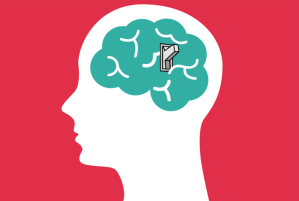
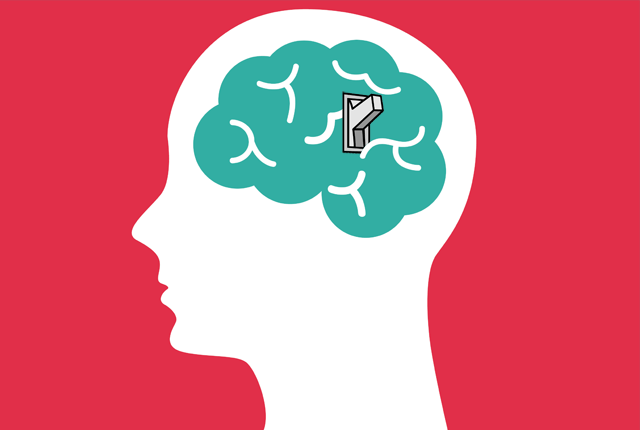
It is as if my brain has some sort of language switches.

Like this.

light-switch

Except that I have four of them. When my Turkish course mates speak to me in Turkish, automatically my brain will put itself into Turkish, but sometimes when my course mates just can’t wait for me   see me struggling to find the words, they’ll start going “Do you know Arabic?” which I do know, automatically my brain will put itself into Arabic with Turkish on standby, which results in me still struggling, again, to speak, because Turkish is interrupting the Arabic circuit in my head. To make things worse, they sometimes say, “Oh you can just speak English if it’s easier for you.” And my brain activities end up to look like this.

disco-floor-lights

The main cause for this is my limitation in grasping the two languages. I am still on my way. I’m still working towards it. I really hope that one day, I am able to translate between languages like Mufti Menk did here

Reality Check

Time is a funny being. No one has seen time, but yet it can fly, it can lie, it can run out, and be up. It can be spent, killed, and passed.  [Ameen Misran – The Other Side Of The Coin]

AAAAAAAAAANNNDDD here we are entering the 5th month of the year. How fast time flies, right?

Right?

RIGHT?? 

It feels like the new year was only yesterday, and today I’m already counting down to my final and summer break. One more month before I’m done with my last language preparation and next semester insyaAllah, I’ll finally be starting my first year of university.

MasyaAllah, we are reaching May already. It’s really so unbelievable.

Since it’s almost already May, don’t you think it’s a good time for us to review how we are progressing so far?

How many of your new year resolutions have you crossed out? How are you progressing?

And me. Hmm.

Warah’s 2016 Analysis [as of April 2016]

[Reference]

  • One Little Word : Rise.
  • Build a website. [checked, but I is no pro so a mere upgrade to a dot com is fine I guess]
  • Book Challenge : 2 books per month in the first 6 months, 3 books per month for the rest of the year. [Progress  : 5/30]
  • Produce 1 cerpen/month. [Progress : 0/12]
  • Blogging : 2o posts [Progress : 7/20]

download (4)


I’ve actually sensed that I’m not progressing much during the middle of this month as one day I was having a willpower slump after being too preoccupied with other things. So that day I decided to look back and reflect what went wrong and where it went wrong. I did some research and found some techniques that may be utilised to maximise the outcome.

  1. Keep track consistently.

Keeping track is the one of the ways, if not the only way to be effective in reaching our goals. Record what you want to achieve on any suitable tool. I highly prefer writing down in my planner, and for certain checklists I put it on Google Drive.You might also want to try using apps or simply using your phone, whichever you prefer. Keep track of your progress in your preferred tools so you can have the overview how what you have done and what needs to be done.

I burn out easily despite of keeping track of things because I was not doing it in an ideal and consistent time space, so sometimes, when I let it for a long period of time I lost it. Having a regular interval between recordings is also crucial so you can keep up or even race against the time

2. Make time to record.

Complementing the first point, this forces you to see your progress. This doesn’t have to be everyday if you feel like you can’t make it. As much as possible, I try to set aside 30-45 min every day analysing, recording, and doing self-reflection, but I allow myself a maximum of 3 days between recordings because sometimes when I have so much to do (mostly due to procrastinating) I need to hit the sack as soon as I’m finished because I’m very particular with sleep. But honestly, it’s best if done everyday.

3. Out of sight, out of mind.

If you are this type of person (like me), having a physical tool like paper or book is better so you won’t forget. Keep them where you can see them easily, so it reminds you when it’s time to cross out the check list and feel like a boss. Like my checklists I have on my Google Drive, I print them out so I don’t have to get on my laptop every day and update them once every one or two weeks.

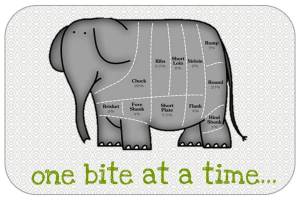
4. Eat an elephant.

How do you eat an elephant? You don’t eat them . 1578c80f0feae231b50cf1d3b641e593


Okay serious.

You eat one bite at a time. Which means, from one big goal, you break it down into smaller goals. For instance, I’m planning to finish 2 books per month, so how can I do it?

Using some maths  :

2 books = 1 month

2 books = 30 days

Hence,

1 book = 15 days.

So I can focus on finishing the current book in my hands in 15 days. Now that I already have the book I can break the book again into smaller parts to fit in the 15 days. For example :

1 book = 15 days

30 chapters = 15 days

2 chapters = 1 day.

5. Be sensible.

How do you eat an elephant in one day?

Well, unless you have a stomach with the size of a average hand luggage and a metabolism as fast as lightning, you can’t eat an elephant in one day, even though one bite at a time.

Knowing yourself and having a common sense is crucial as well.

Taking the book again as an example, if the book happens to be 1000 pages and I’m the Minister at the Ministry of Education (dream, believe, make it happen), I don’t think I’ll be able to finish it in 15 days. So it’s fine, maybe for that month I can skip the other book and make it up in the coming months, if possible.

So keeping the goal according  to our ability is equally important to avoid harms and disappointments. Keep it mind that this is not the same as not dreaming big enough. This actually means being wise. There’s a difference between pushing the limit and pushing over the limit.

6.  Discipline, discipline, discipline.

All points mentioned above will never, ever be effective without having discipline. Behind every success is the perseverance to keep going until we reach the top. More often than not we will have that one point when we are lazy and all we want to do is sleep. This is a great battle within us that we have to fight. As much as possible, don’t give in to the evil whisper. Defeat it, and keep on winning.

7. Seek for Allah’s help.

Last, but not least. In fact, this is the first thing we should do as Muslims. Allah can build the Universe, He can help us build our dream. With His great power He can make everything possible. Our fate, after all, is in His hands. Build a good and strong relationship with Him through acts of worship especially solat. Ask from Him anything you want, because He will definitely grant you. Remember Him, and He will remember you.

Hope we can benefit from this together 🙂

In The Case of A Mukmin.


Depression_2014_Types_10-22-14_5PM-img_1280x720

With every choice we make, there’s always consequences that we need to face, be it good or bad, and chances of screwing up is always present. On this road which has been promised to be thorny and bumpy, giving up is indeed the easiest decision to make. I mean, no sane human being would make a conscious choice to throw himself into the fire, right?

But in the case of a Mukmin, he knows that the fire is just an illusion, and beneath the illusion, something better is waiting. All the thorns and bumps on the path that he has chosen are nothing but what he has to go through to reach that better something at the end.

But human will always be human. We trip,  we get hurt, we break down, we screw up and sometimes, all we want to do is turn back, and take that easy road. Why bother troubling ourselves with all the pain we have to go through?

But in the case of a Mukmin, that road is the only road he can take to reach his Master in a happy state. He endures everything because all he wants is to meet his Lord with a calm heart, knowing that he will be rewarded with what has never been seen with the eyes, what has never been heard by the ears, and what has never crossed the heart.

However, there are always other elements that seem to be trying so hard to stop us from moving forward and ignoring all those things that pained us. The fear, the lost hope, the sadness, the failures and the whispers. They just keep on perturbing our mind, leaving no space for peace even for an inch.

But in the case of a Mukmin, he knows the whispers are merely trying to stop him from doing what’s right, and every single time he feels that rush of doubts flowing in, he brushes them off and said to himself,

“Not today. Not today.”

The gold in Umar.


I’m not a series person. I’m not patient enough to wait for the next episode until the next week. I’m not even patient sometimes to wait until the end! I have close friends who are big fans of the K-entertainment, so a few years back I tried to jump into the wagon by watching Boys Over Flower and the music videos of the K-Pop hits of that time and learning the dance moves, but none of these managed to make me sit still. I gave up the former after only four or five episodes.

But learning language coupled with my shyness to speak up forced me to diversify my ways of learning. Last year, when I was learning Turkish, I tried to start watching Turkish series, but anyone who has experience with Turkish series will know how even the freaking montage takes about five minutes and one episode could take up to two hours.

And now as I am nearing to my Arabic prep final and my Arabic is still not able to convince people that I actually studied Arabic, I had to resort to the same technique i.e watching series. Alhamdulillah this time it’s easier because :

  1. I can find series that don’t last for two hours
  2. It’s easy to find something that’s Syariah-compliant because really, sometimes it’s hard to find Turkish series/music video that don’t make you go Astaghfirullah every 3 minutes.

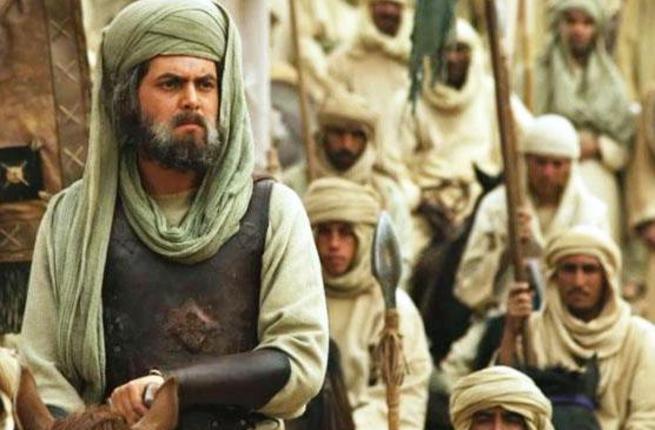
So one of the first on my to-watch list is the Omar Series.

download (2)

I’ve heard of Omar Series from my friends way before I decided to come to Turkey, but I never got the chance to watch it. Only after my Arabic course did I  make some time to see how it looks like. But this too, did not last long. I only managed to watch one episode then I got busy and completely forgot about it.

Then during my recent exam I had a bad case of anxiety. It was the second final exam before the major proficiency test this May-June, and my Arabic is still so bad. One day I was so anxious that I couldn’t study, which made me more anxious which made the mental block worse. But I gotta do something about it. Then I remembered about the series, and I came up with the decision to “study” through the series and binged- watched it that night.

What I got was not just a better understanding of some words I couldn’t use before, but also some enlightenment on the early days when Islam just started to be propragated. Finally I understood why not everyone was tortured by the Quraisy back in the days. To those who want to understand the history of early Islam better, Omar Series is definitely a recommendation.

Just as the title says, it’s a depiction of the life of Umar Al-Khattab R.A from before Islam until post-Rasulullah SAW period. The series is really good in my opinion as it gives a clearer picture of how it was and what actually happened back then. I really thought Umar was this ruthless man who would beat the cupcake out of the Muslimin, but apparently he was not that ruthless. But yes, he was tough. He joined the elderly heads of clans at Dar An-Nadwah (kind of a parliament of Quraysh clans), discussing about measures they needed to take to stop the new religion Rasulullah SAW was calling to which was ‘threatening’ them, as it was calling to many aspects that would destroy their tradition of idolatry, social class division and despicable practices that they firmly upheld.

Umar being a member of Dar An-Nadwah would mean he is the last person you’d want to see if you were to be a Muslim in the early period. The members of Dar An-Nadwah were among the most tyrannical and hostile towards the Muslim, and indeed Umar was so tyrannical that nobody had the faith that Umar would submit to Islam ever, that there was even a statement saying

“Never will Umar submit [to Islam] until his donkey submit [to Islam]”

Not sure if his donkey actually did, but we all know that Umar did embrace Islam eventually. The news of his submission created sensations among Muslims and the Quraiysh opponents, as nobody saw it coming.

After becoming Muslim, to everyone’s amazement, he became among the biggest defenders of Islam. He became one of Rasulullah SAW closest companions. His bravery put Muslims at that time into a safer position, and only after he enters Islam the Muslims were able to do their ibadah openly. He was also nicknamed Al-Faruq , meaning “he who distinguishes truth from falsehood” .  During the event of Hijrah, while most companions were leaving Makkah covertly, he went up to Kaabah and announced his migration, and challenged “those who want their wives to lose their husbands, their children to lose their parents, and their mothers grieving endlessly” to stop him.

Umar R.A is a nice example of one of the ahadith Rasulullah SAW.

From Abu Hurairah R.A, “Rasulullah SAW said : “The people are like mines of silver and gold. The best of them in ignorance are the best of them in Islam if they have understanding.””

Umar R.A was already a respected man long before he was a Muslim, but he had a dark pre-Muslim past. If the people during the Jahiliyyah period were coffee, Umar R.A would be espresso. There was one time when he was stalking Rasulullah SAW when Rasulullah SAW was praying, Rasulullah SAW was reciting Al-Haqqah. He was actually touched by the ayat, but he said (not the actual dialogue) :

“This sounds just like the Quraisyi poem”

Then the 40-41 ayat of Al-Haqqah said :

“Most surely, it is the Word brought by an honoured Apostle. And it is not the word of a poet; little it is that you believe.”

Then Umar R.A said :

“Then he must be a forecaster.”

To which, the 42nd ayat said :

“Nor it is the word of a soothsayer; little it is that you mind”

And that moment, he felt something in his heart, but the Jahiliyyah in him was too strong. He refused to let go of their Jahiliyyah traditions.

But ‘alaa kulli haal, Allah answered Rasulullah SAW’s prayer to make either of two Umars a Muslim (the other being Abu Jahal) by choosing Umar R.A. Allah granted Umar R.A understanding in Islam, and you see what happened?

That same man who were tough to Muslims before he become one became as tough to the Musyrikin as he was to Muslims after he became one of them. The qualities he had during Jahiliyyah did not diminish at all after he became Muslim, on the contrary he made use of that quality to contribute to Islam, and in the end, he is one of the significant figures who paved Islam its way to glory.

Fact is, all of us have the goodness in us that we can make use to help Islam. Allah has created us in the best form [At-Tiin : 4] and Allah has shown us the ways [Al-Balad]. Understanding is an effort, just like how we try to understand all the mathematical formulas. So we’ve got the gold. The only thing we need to work on now is the understanding. That’s what happened to Umar R.A. Already a gold himself, his value got higher as he understood what being a Muslim is all about.

Umar R.A maximised his gold and continued the legacy of Rasulullah SAW until the end of his life.

Have you found your gold yet? 🙂

Status

The Pursuit of Happiness.

When people ask me “How’s Istanbul?” I can’t help but cringe and answer in a very unconvincing manner that it’s okay, got few problems here and there but okay in general.


“should i say i hate it there?”

I always did this when I was home for the last summer break and it got to my mum’s nerve and she questioned why am I so doubtful that Istanbul is marvellous.

Well, it’s quite complicated. I’d say me and Istanbul are  like in a love-hate relationship. It feels like, it pisses you off again and again then it gives you a bouquet of lilies and roses (more like tulips tbh but I love lilies and roses hoho) to pujuk you off and it’s so pretty it swept you off your feet.

Like, I don’t hate it, but I don’t entirely love it either.

Then life slapped me so hard one day and I realised that actually, it’s not that bad that I have to whine so much about it. I contemplated deeply and realised that all this while I’ve been using a wrong set of eyes to view the situation, and a wrong attitude when handling it.

I learnt one day that the more we expect, the less happy we are.

I’d say I had quite a high expectation of everything. I didn’t get a head-up that I’d have to go through so many things. The datang sekolah-belajar-balik is no longer the way of life, and having to go through it with long-distance support was quite challenging.When I saw my friends studying in UK or Brunei I can’t help thinking how lucky they are to not have to go through what I was going through. I wondered how did they get by so easily.

But that’s where the problem lies. We tend to be so nosy peeking at somebody else’s lawn, and feel miserable later to see that our grass does not seem to be as green as theirs, and we wish that we had their lawn, forgetting that we actually only have ours to take care of, and their lawn is none of our business.

So actually, this is how one of the faces of ungratefulness looks like. It’s focusing on what we don’t have and neglecting what Allah has blessed us with. With ungratefulness, everything will look so wrong. We will never be satisfied with what we have because all we see is what others have that we don’t have. We need to start living our own life instead of wishing to live others’.

Hence, to be happy we need to start focusing on what is already in our hands, and the first step to happiness is being grateful. Being grateful lets go of the unnecessary worries that burden our heart. Being grateful means utilising what we already have to its maximum, benefiting ourselves and others.

Be grateful, and He will increase you. [14:7]


Muhammad Al-Fatih vs Abu Ayyub Al-Ansory

I’ll be hitting the big 2-0 this year. Yeay, I’m legal again. I’m sure I’m getting to the legal age somewhere in another part of the world haha. So, quite normally, a question arise when some friends are nearing to their new age.

“What have I done for the ummah?” Well, actually we ask ourselves this question quite often.

And one quite common question also,

“Sultan [Muhammad] Al-Fatih umur 21 sudah menakluk Constantinople. Aku apa dah ku buat?”

IMG_6851

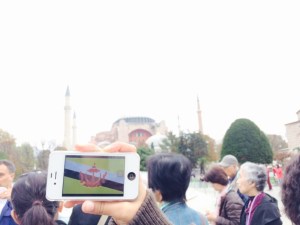
My first Ayasofya shot #proudbruneian #generasiberwawasan

Honestly, I’m no different. I have been asking myself the same question not too long after i turned 17. So that’s almost 3 years ago and, if i took Al-Fatih’s achievements as my benchmark a bit seriously, I’d have one more year to go. But I don’t wanna get into trouble for vandalising the remnants of the Wall of Constantinople.

Okay i kid.

Let’s take a stroll down the memory lane shall we?

Istanbul was previously known as Byzantium before Emperor Constantine the Great made it as the capital of East Roman Empire, which led to it being named Constantinople. Although the ‘Uthmaniyyah Caliphate besieged the city in 1453, attempts had been made since the time of the Umayyad Caliphate.

While the Muslim attempts to capture Constantinople were motivated by the prophetic revelation of Rasulullah SAW, other foreign powers were also trying to seize the city due to it’s strategic location. But the wall was unbreakable. None of the numerous attempts managed to pass the fortress with victory.

However, finally, the epiphany of Constantinople being captured by the best leader with the best army was proven with the success of Sultan Al-Fatih entering the city after quite a challenging journey, mentally and physically, at the mere age of 21.

His success at such a young age can be a motivation for us youngsters who most of the time do nothing except lazing around to get up and do something for the world.

The story of Feth-i Istanbul as we call it here, together with the fact that it was a job of a brave young man is quite a pride for the Muslims (tho we have not much to be proud of anymore).

A recent tazkirah session with some friends however showed me another perspective on the story. Remember that Al-Fatih’s attempt is not the first one and the Umayyad Caliphate made the first move, 8 centuries before them? And even during the ‘Uthmaniyyah time attempts had been made since the previous sultans.

So the Siege of Constantinople is not a one-time event, but it was a series of attempts made by generations of Muslims who were holding the power at the time. And it all started with the first Arab Siege of Constantinople. In the campaign, there was one important figure that we tend to overlook.

He was Abu Ayyub Al-Ansory.

He was the lucky sahabah whom Allah had chosen to receive Rasulullah SAW as his guest during the Hijrah to Yathrib, now known as Madinah (Al-Munawwarah TEEHEE). Rasulullah SAW stayed with him for a few months while the Masjid An-Nabawi was being constructed in front of Abu Ayyub’s house. So, after the construction was done, they remained neighbours.

Can you imagine how old he was during the Umayyad Caliphate? Yes, very. He lived through the time of Rasulullah, Khulafaa Ar-Rasyideen and the Muawiyah I of the Umayyad Caliphate. However, that did not stop him from joining the campaign. In fact, he never missed any war campaign in the early Islamic history except for when he was on another mission.

He could opt to stay and retire from joining war with that age, but he didn’t. Constantinople being set free from the hands of the Eastern Roman Empire was a promise of Allah that every Muslim at that time was looking forward to. Abu Ayyub wanted to see for himself the victory that Allah had promised. How impressive it is that his spirit did not age with his body.

He, however, did not get to see Constantinople being conquered. He fell ill during the campaign and requested to be buried to the nearest point the army could reach to the Wall of Constantinople after his passing, so he “could hear the sound of the footsteps of the horses of the army who would liberate the city”. His grave had been developed into a mausoleum and a masjid was built nearby by Sultan Al-Fatih right after his victory, making it the first masjid built after the Fall of Constantinople and it was named Eyup Camii.

You see, there are so many ibrah (lessons) that we can get from this epic story of success. When we see the bigger picture we will see the tiny,tiny details formed together that make the picture beautiful. What appeals to me the most is the fact that age is indeed just a number.

Al-Fatih’s young age did not stop him from realising the dream that rooted back to the first Daulah Islamiyyah, just like Abu Ayyub’s old age did not stop him from participating in realising the dream that he witnessed being promised to happen. They both could use their age as being “too young” in the case of Al-Fatih or “too old” in the case of Abu Ayyub, but they didn’t. All they had in themselves was determination to just make it happen, by hook or by crook, win or lose, dead or alive.

No matter how old we are now, what matters the most is the desire to make a change and the effort in working towards it. It’s never too early and it’s never too late. Creating a tomorrow requires a work today. It’s okay if you have passed your 21st year of life, and it’s still okay if you have passed your 80th year. But of course it’s better if you haven’t. The goal is to create a change to the world, whether or not you are 21.

 “The best of people are those that bring most benefit to the rest of mankind.”

-Rasulullah SAW-

May Allah ease your affairs 🙂


Allahumma Inna Nas-aluka Lisaanan Rotiban Bidzikrik.

“What actually made Hassan Al-Banna compile the Ma’thurat?” I asked my friend one day.

“Nothing significant, he just compiled it. It just contains authentic dzikr” She said. How ignorant I was to not see the real significance of it.

I was introduced to Al-Ma’thurat by a friend. Al-Ma’thurat is actually a compilation of dzikr and prayer derived from the Qur’an and authentic hadith, compiled by Imam Hassan Al-Banna and recited in the morning and evening. It has a short version called Ma’thurat Sughra and a long version called Ma’thurat Kubra. I usually read the Ma’thurat Sughra only.

After getting a copy for myself I started reciting it every time I was on my way to school in the morning and back to home in the evening. I was in Upper Six at that time. But I couldn’t be consistent doing it every day, and there were times when I stopped for quite a long period of time before resuming and stopping again and again. One time when I started again I actually came to a point where I memorised almost the whole Ma’thurat Sughra, yet it was still a cycle of stopping and resuming.

The recurring failures to stay istiqamah eventually made me wonder why it was really hard for me to stay consistent. Until one day I decided to take some time and recite the Ma’thurat along with its meanings only then I realised that I’ve been understanding it wrong!

alice

It’s not like I’ve never read the meanings before. I have, but knowing the meaning and understanding the meanings are two different things.

The real significance of Ma’thurat is not because it’s a compilation of dzikr to be recited twice a day, it’s actually the effect of reciting it on your relationship with Allah and being His true servant. It’s the outcome, not the thing itself.

We often forget because we are human after all. This is when all these reminders and prayers come in handy to keep us aware of not crossing the boundaries set for those who sincerely submit to Him.

May Allah make us among those who understand.

Why are you doing this?

Bismillahirrahmanirrahim.

Raise up your hand if you want to score GPA 4.0 flat this sem!

I like to ask my friends.

“How’s uni life going?”

and their reactions are mostly

“Banyak assignments 😦 ”

“Ngaleh”

“Hmmmmmmmmmmm”

Now that I have (kinda) entered university, and despite of only learning Arabic Language every day I can’t help entering my room feeling

  _52272673_crying-baby

I’m very sure I’m not the only one.

And I’m very sure we all have had this since secondary school years, when we are expected to progressively mature ourselves up, and this distress gradually increases as we enter the next level.

Let me tell you a story.

I was one of the lucky (was I?) students from the first batch on SPN21. I got into the 2-year course and being typical Asians, we were expected to score good grades (read : straight A’s) for our O Levels. I didn’t do well at first, but Alhamdulillah through the encouragements from my family, teachers, friends, and most importantly by the grace of Allah I managed to get through it alive and well. I worked hard, got sick at least once in every term, dropped 4kg of my weight in a month and I thought, it paid off. This was 4-5 years ago.

Everyone wants to succeed. But only some are willing to strive for it.

For those who are willing to do so, ganbatte! May Allah make it easy for you.

In doing so, however, have you ever thought – “Why am I doing this?”

I have, and I wish it crossed my mind 4 years ago.

It’s not wrong at all to work hard for the reward awaiting at the end. However, if we did get the reward, then what’s next? No one will remember our achievements, and when we leave this world, everything that happened will have little significant value to anyone.

Are you willing to work for something, that in the end you will leave?

Or maybe we are working hard to beat that someone up in a more subtle manner like gaining more money, status, promotion, popularity or anything.

Why stress up to impress the people we don’t like?

Whatever the reason is, we have to ask ourselves, “Is it really worth it?”

a1394c871733b915371bfbde08db5375

I did not regret working hard, but I do regret not working hard for the right reason.

Imagine whatever we do is not with the intention to please Him, to help His Deen, to actually be His servant, and all the sweat and pain are wasted for something temporary, and we don’t carry enough of good deeds to present to Him on the Day of Judgement.

Hence, we must be mindful towards our actions. In every effort we make, we have to make sure that it is not just “I need to be excellent so I can get good job,” but  “I need to be excellent so I can get a good job that can help me support my family and my effort to serve Allah.”

May Allah grant us steadfastness in living this life for Him.

19 things I wish you knew.

Bismillahirrahmanirrahim.

Alhamdulillah thumma alhamdulillah, another year has passed by and today, I’m one step closer to finishing my second decade of life. Being 19 in the current world is considered as still young, but honestly speaking, I feel that I’ve lived too long and done too little for everything. After 19 years of handling this responsibility called life,dear Young Warah I wish you knew that :-

1- Hidayah has been around since 1400 years ago.

You don’t need to wait until you get a dream showing you getting thrown into the Hellfire to make you start to be a practicing Muslim. It’s there when the Azan is echoed, it was there when your mother asked you to put on the tudung, it was there when you got enrolled to sekulah ugama. It was there when you were yearning to be a better Muslim.

2- Be wise in choosing your friends.

If you surround yourself with 5 successful persons, you will be the 6th. If you surround yourself with 5 passionate persons, you will be the 6th. If you surround yourself with 5 idiots, you will be the 6th. I can’t stress enough how important it is to be careful in choosing your friends.

3- Time waits for no man.

Procrastination gets you nowhere. You snooze, you lose. Everybody gets the same amount of time everyday, but it’s up to you how you would like utilize it.

4- Moving on isn’t about forgetting.

It’s not about losing your memory on what’s happened, but it’s about not feeling a great amount of pain when it enters your mind, and being able to not cry as you go to sleep. Detachment hurts, and it takes time. Yet, you will get through it eventually.

5- Stop being too self-conscious.

Yes, people will look at you, and people will judge you. But whatever, they will forget about it in the end.

6- You always have a choice, and to a certain degree, it’s okay to be selfish.

You can choose to do what you want, you can choose to eat what you want, you can choose to go wherever you want to go, you can choose to walk away when the situation is not to your liking.

7- There is another life after this one you are currently living.

It lasts forever. Make jannah your aim.

8- Habit is like a building.

You can construct it, you can destruct it, and the latter is much more easier than the former.

9- Good things take time, and it’s okay to take time.

It’s not about being able to read a 500-page novel in an hour. It’s not about getting toned arms after 7 days straight of weight lifting. It’s not about mastering the grammar rule the first time you come across it. The most important thing is being able to retain whatever the good outcome is in a very long period of time. Also, time heals all wound

10- Be careful with your words.

This includes your facebook posts, tweets and blog posts. They may haunt you in a horrific way.

11- You are responsible for yourself.

In the end, you have to live your life alone. You can’t rely too much on others, and you shouldn’t hook yourself onto anyone else except for Him. For every action and decision you make, the biggest impact is always on you.

12- Financial intelligence is crucial.

Because almost everything needs money, and it’s very important for you to be smart in making any purchase. Always let the needs on top of the wants.

13- Never underestimate the power of Parents

Always keep good relationship with them. Sometimes in the storm of life, their prayers are what you need in order to keep yourself going strong.

14- and the power of Siblings.

They can be your life saver. Without you realising, they are actually like the stink on your feet. They might not be entirely pleasant, but they stick more with you more than anyone else does.

15- Read a lot.

Like, a very lot. It sharpens your brain, and the humanity is having more than enough ignorance than it should bear.

16- When you love something, you will make time for it. So will you when you really want something.

You are never passionate about something until you make sacrifices to achieve it.

17- You don’t need to work hard to prove yourself to others. You don’t even need to actually.

Action and outcome speak louder than words.

18- You can always do better.

Given that you are willing to fight that devil inside of you.

19- The perfect time to make changes is NOW.

Not later, not tomorrow, not your next birthday.

Best of luck in sailing this stormy sea of life.
Taking time.

Bismillahirrahmanirrahim.

I can’t believe that it’s already my 8th month here. Time flies so fast. And after 3 months, I’m currently dealing with the same issue. I can’t count how many times I woke up in the morning feeling frustrated and useless. Instilling istiqamah in yourself is not an easy task.

In all honesty I still find Istanbul hard to cope sometimes. I’m used to the laid-back life of Brunei, while here I have to catch almost everything from the shuttle service, bus, meal and many others. My time needs to be adjusted according to several schedules, unlike in Brunei where I only need to tell my father/brothers/sisters a few hours in advance that I have something going on at this particular hour, and being late a minute or two was not a problem, and leftover food is almost always available.

But Istanbul is not the only issue. Being the first and only Bruneian, I don’t have any experienced Bruneian senior that I can refer to about adjusting my life here. I don’t have anyone to share one common ground with that specify us as Bruneian, like the longing for Nasi Katok, discussion on how the implementation of hudud is going, the craving for ambuyat with cacah binjai, or what news currently trending on Whatsapp.

And to make it worse, I’m moving on from school to university. Life was easy with the fixed schedule and specific set of clothing (read : uniform) and certain achievements that needs to be attained. Now, one hour of the morning is wasted just on choosing what to wear to class. And with only 5 hour of lesson everyday in a foreign land, the urgency to fill the other 19 hours is giving me mental-block.

However, every day I learn something new,something that no educational institution can fit in their syllabus. And after some times I realised that changes need not to be fast, and it’s alright to take time according to what you are able to do. Self-improvement is neither something that happens overnight, nor does it something that has a limit. It is an ongoing process. What matters the most is a change that lasts.